01 — Air Liquide

LIBS — Legacy billing system modernization

Full redesign of the Large Industries Billing System, a critical contract management and billing system in use since 2002. 100 hours to untangle decades of accumulated complexity into an interface that finally works for the user.

Enterprise Redesign Information Architecture Design System Prototyping

Company

Air Liquide

Year

2025 – 2026

Timeline

100 horas

Role

Product Designer (solo)

Tools

Figma · Alpha DS

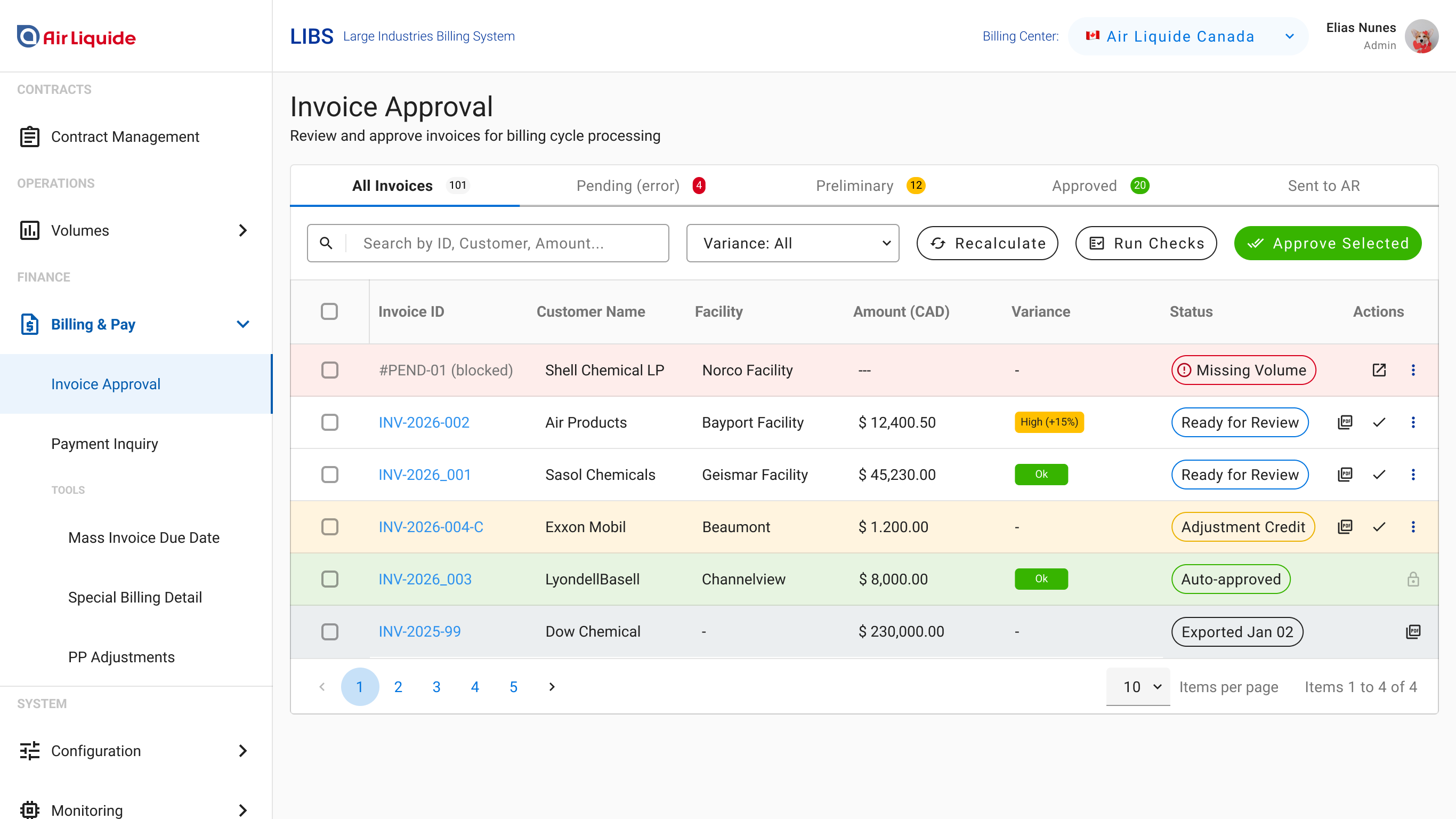
Visão geral do protótipo LIBS

Data shown is fictional and has been altered to preserve project confidentiality.

Context

A 2002 system managing global industrial contracts

The LIBS — Large Industries Billing System is Air Liquide's billing platform, used to manage contracts and generate invoices for large industries worldwide. Its users are internal Air Liquide employees — teams responsible for entering and administering contracts.

In use since 2002, the system had accumulated decades of patches, adaptations, and unplanned complexity. The result was an interface full of ambiguity, with broken information architecture and a learning curve that required memorizing system bugs rather than business processes.

"Training sessions didn't teach contract management — they taught how to work around LIBS bugs."

2002

System origin year

100h

Total project timeline

Solo

Project execution
Problem

An interface that trained people around bugs, not around the business

The main pain points identified in the two discovery sessions with system managers revealed a clear pattern: the interface was an active obstacle for the people who relied on it every day.

Navigation ambiguity: users couldn't predict where each menu item would lead, causing wrong clicks and constant rework.

Broken information architecture: the hierarchy of pages and flows didn't reflect business logic, forcing users to memorize unintuitive paths.

Inconsistent taxonomy: labels and section names didn't match the vocabulary teams used day-to-day.

Bug-dependent training: onboarding consumed time teaching workarounds instead of actual business processes.

Outdated visual: the interface was visually inconsistent with Air Liquide's other products, with no application of the corporate Design System.

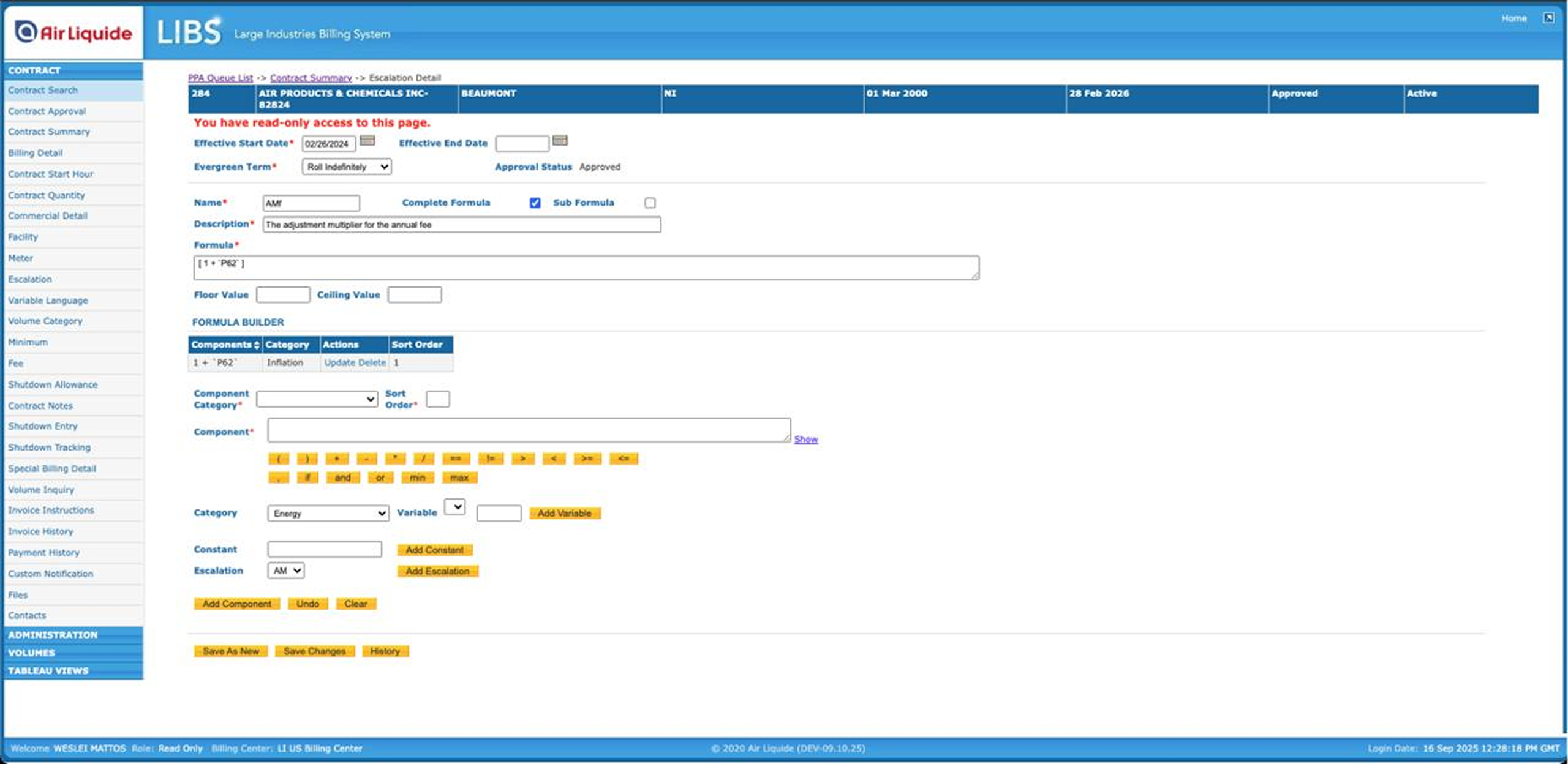
Antes — Interface original
Interface original do LIBS
Antes — Menu lateral original
Menu lateral original do LIBS

Original LIBS interface — system in use since 2002

Data hidden to preserve company confidentiality.

Process

From diagnosis to prototype in 100 hours

With a tight deadline and limited access to end users, the process was designed to extract maximum value from available information — prioritizing the highest-impact problems and delivering a solid visual response.

01

Discovery — Immersion and system use

Two immersion sessions with LIBS managers to understand key pain points. In parallel, direct use of the system to experience problems firsthand and identify patterns not mentioned in meetings.

02

Heuristic analysis

Systematic interface evaluation based on Nielsen's heuristics. Problems catalogued by severity, with special focus on information architecture, taxonomy, and navigation consistency.

03

Benchmarking

Research into modern enterprise systems to identify established patterns for navigation, menu organization, and visual hierarchy applicable to the LIBS context.

04

Prototyping with Alpha DS

High-fidelity prototype developed using Alpha Design System — Air Liquide's corporate Design System. Focus on restructuring the side menu, new information architecture, and simplifying the main flows for contract management and billing.

05

Delivery and documentation

Interactive high-fidelity prototype delivered with documentation of key design decisions. Look & feel alignment with the development team, without formal handoff given the project's restricted scope.

Solution

An interface that works for its users, not against them

The redesign started from a simple principle: every design decision had to directly address an identified problem. Nothing was changed for aesthetics alone — everything is grounded in the diagnosis.

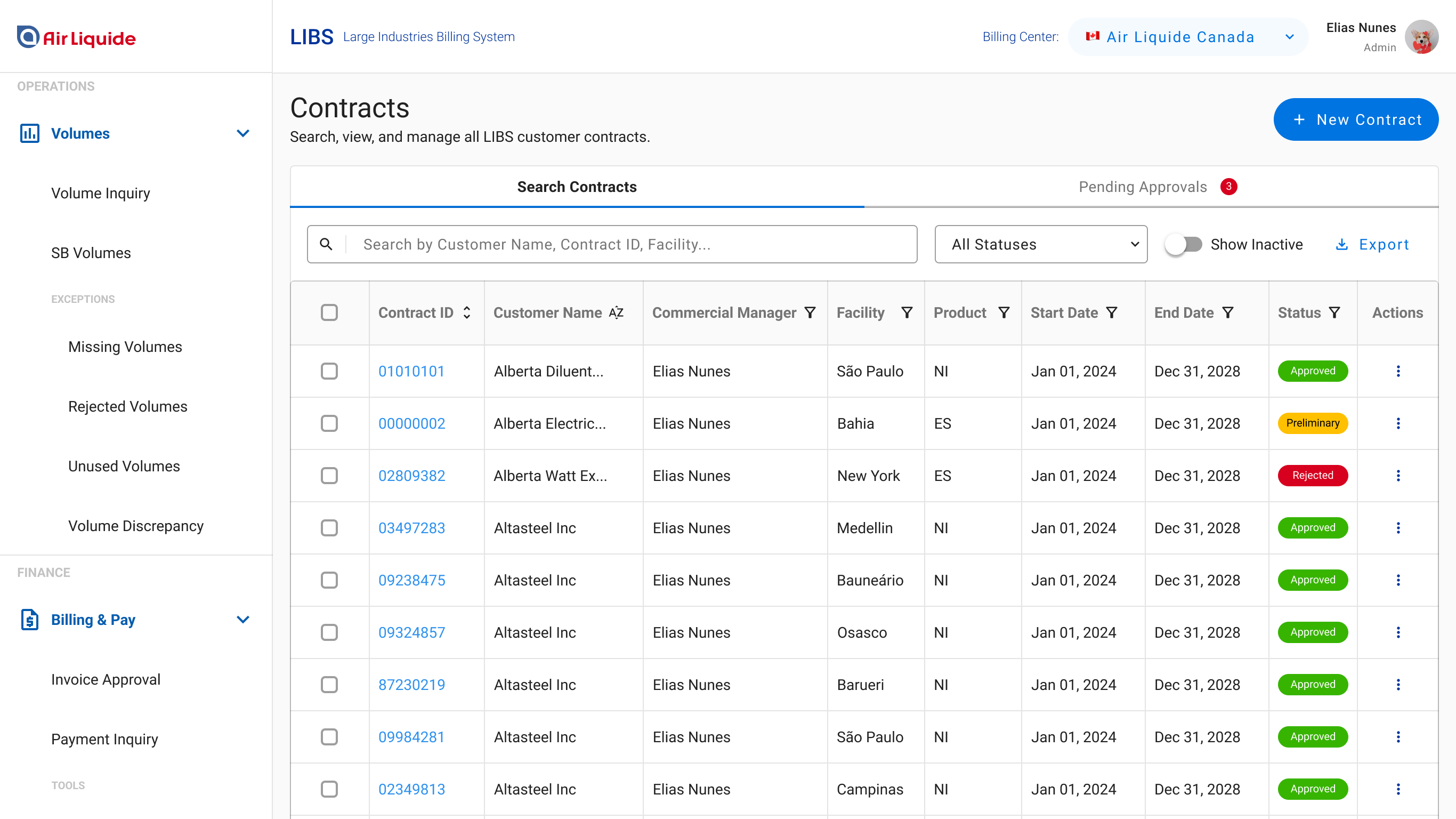
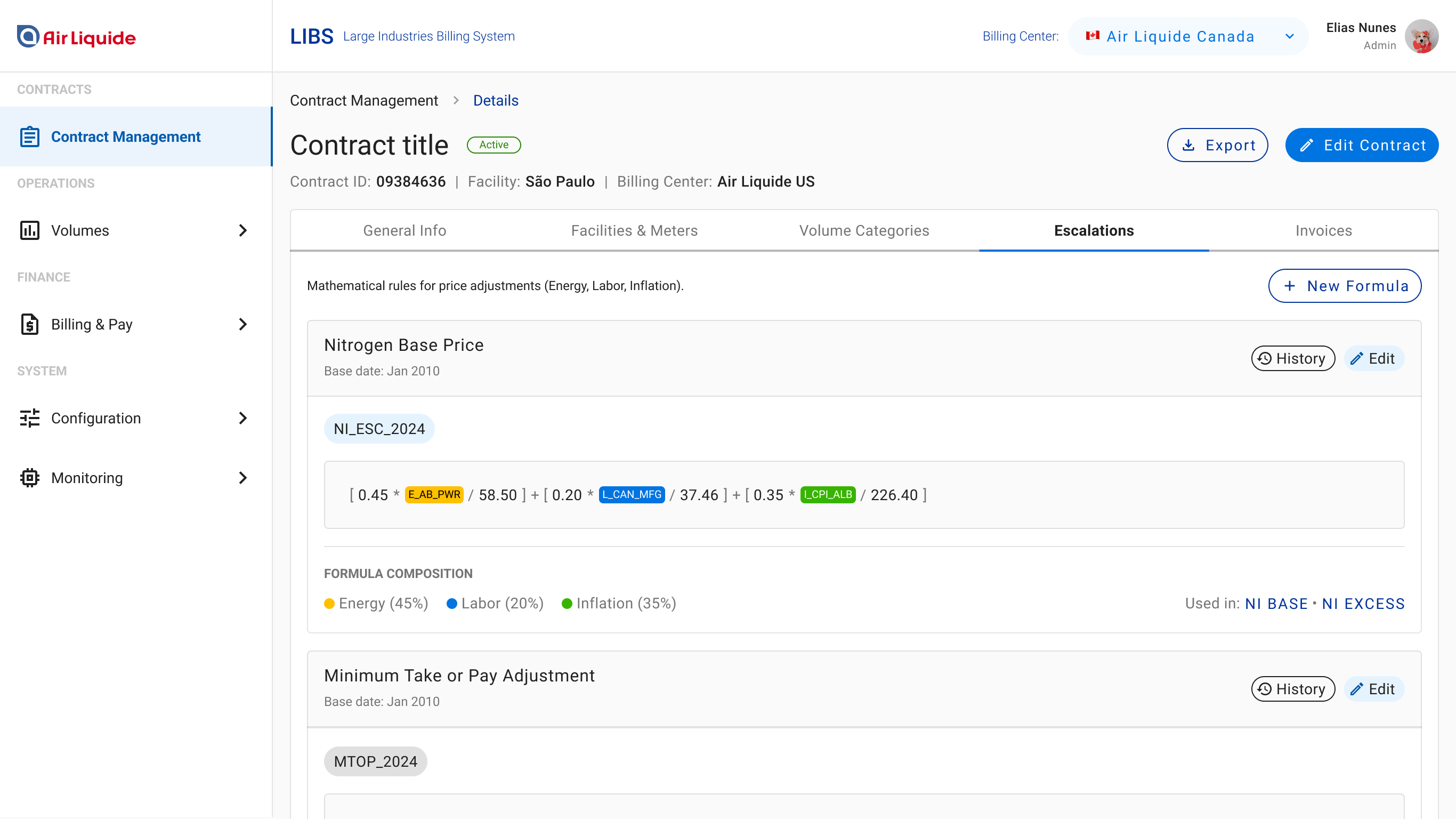
Nova interface do LIBS — visão geral

New LIBS interface — high-fidelity prototype with Alpha Design System

Data shown is fictional and has been altered to preserve project confidentiality.

Interactive prototype walkthrough — contract management and billing flow

Data shown is fictional and has been altered to preserve project confidentiality.

New information architecture: full restructuring of the page and section hierarchy, aligned with real business process logic — not the technical structure of the system.

Redesigned side menu: new taxonomy with clear labels and intuitive groupings, eliminating the ambiguities that forced path memorization.

Simplified flows: reduced steps for the most frequent tasks — contract registration and management, invoice generation and tracking.

Modernized visual with Alpha DS: consistent application of the corporate Design System, bringing LIBS visually in line with Air Liquide's other products.

Tela principal antes

Data hidden to preserve company confidentiality.

Tela principal depois

Data shown is fictional and has been altered to preserve project confidentiality.

Results

Training about the business, not about workarounds

The project was delivered before implementation. Expected results were defined based on problems identified during discovery and validated with system managers.

Business-focused training: with an unambiguous interface and clear flows, new employee onboarding can focus on contract management — not on working around system limitations.

Reduced support tickets: clearer menus and navigation tend to reduce the need for support on routine tasks.

Greater day-to-day efficiency: simplified flows for the most frequent tasks reduce time spent on contract administration and invoice generation.

Visual consistency with the Air Liquide ecosystem: applying Alpha DS positions LIBS within the company's global corporate visual standard.

Project delivered within the established 100 hours, with an interactive high-fidelity prototype and design decision documentation for the development team to continue.

Next case

Auto Insurance Platform — Stellantis